Fit and access
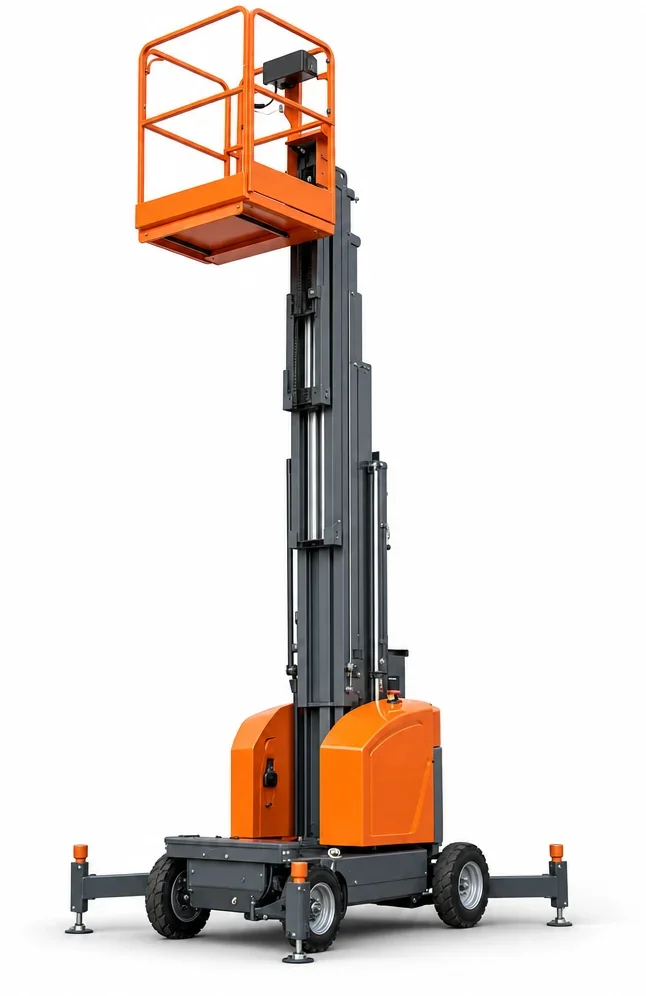
Start with door width, corridor pinch points, and turning space near the task. Many mast lifts pass through standard interior doors and pivot within tight radii, which helps in equipment rooms and service aisles. If the work sits directly overhead with no need to reach over obstacles, a mast lift keeps weight and floor load lower than larger platforms.
Floor conditions and interior constraints
Technical buildings often require low emissions and minimal tire marking. Electric mast lifts match those limits and concentrate weight over a small footprint. Confirm slab load and check for raised thresholds or cable guards that could limit approach angles.
When a mast lift isn’t enough
If you must reach over racking, conveyors, or mezzanines, an /articulating-boom-lift-rental/ handles the geometry better. For wider platforms or higher capacity on slab, an /electric-scissor-lift-rental/ may be more efficient. Outdoor tasks on uneven grades point to /rough-terrain-scissor-lift-rental/ or a boom category.
Local use cases
- Sensor, cable tray, and small‑fixture work in tight corridors
- Ceiling maintenance in retrofit areas where floor protection matters
- Quick access in manufacturing cells without moving large equipment
Planning checklist
- Doorway and corridor widths, turning radii
- Floor protection rules and slab condition
- Work height and need for outreach (if any)
- Obstructions near the task that could require a different category