Define the work envelope
- Height: Estimate working height and back into platform height. Most interior tasks fall within common slab lift ranges.
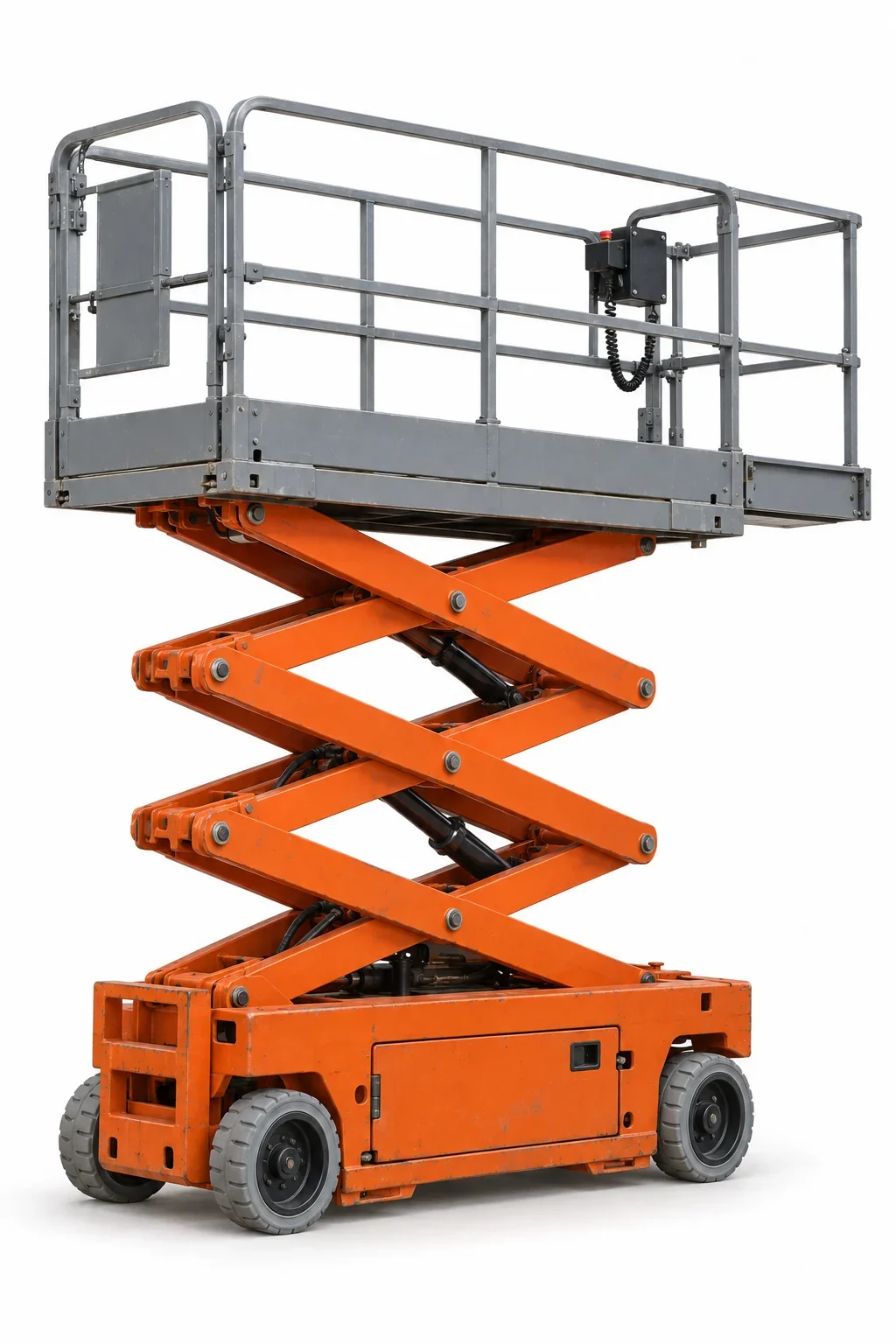
- Approach: Electric scissor lifts excel when the platform can sit below the task line—lighting, cable tray, duct, or signage.
- Path: Confirm door width, elevator limits if applicable, and any ramps or thresholds along the route.
Local factors that influence slab selection
- Smooth slabs in San Antonio distribution and manufacturing buildings support narrow lifts with longer platform extensions for straight runs.
- In data-driven facilities, low noise and zero on-site emissions indoors make electric scissor lifts the default choice.
- Summer heat can raise interior temperatures in partially conditioned spaces. Battery capacity and charging access should match shift patterns and distances traveled.
Features that matter indoors
- Non-marking tires protect sealed floors.
- Compact chassis widths navigate racking aisles and mechanical corridors.
- Platform extension decks increase reach along linear tasks without repositioning.
When a slab unit isn’t ideal
- If the route crosses unfinished pads, gravel, or exterior gaps, a rough-terrain scissor lift may be more practical for part of the job. Compare options at /rough-terrain-scissor-lift-rental/.
- If the work point sits behind equipment or overhead obstructions, consider an articulating boom at /boom-lift-rental/.
Typical interior applications in San Antonio
- Mechanical, electrical, and low-voltage installation in commercial spaces
- Racking, signage, and fire protection punch lists in warehouse bays
- Ongoing maintenance in industrial sites with consistent slab conditions
Actual conditions, the selected unit’s instructions, and site procedures govern elevated work.