Start with geometry: height, approach, and floor load
- Can the machine sit below the task? Scissor lifts work best when you can stage directly under lights, duct, or racking.
- What platform height do you need? Measure working height from finished floor to task, then select a platform height that keeps work within a comfortable reach window.
- What does the floor support? Indoor slabs in local distribution buildings are generally smoother than unfinished pads; know any load limits and door clearances.
Why San Antonio conditions change the pick
- Fast-moving storms and ponding in low spots can turn firm ground slick. On outdoor sites, rough-terrain scissor lifts handle moisture, ruts, and uneven limestone grades more confidently than slab units.
- Expansive clay soils can heave or soften after rain and during summer heat cycles. Tire type and ground clearance matter when staging outdoors for more than a day.
- Large industrial interiors—like wide-bay manufacturing or hangar-style spaces—favor electric slab lifts with longer platforms for straight-up work along long runs.
Narrow the category
- Indoor slab work: Electric scissor lifts with non-marking tires fit through standard openings and reach typical ceiling utilities in warehouses, retail buildouts, and data infrastructure rooms.
- Mixed or unfinished pads: If the route includes thresholds, ramps, or rough cut concrete, consider higher ground clearance and wider tires even when final work is indoors.
- Exterior trades and site work: Rough-terrain scissor lifts with foam-filled or lugged tires maintain traction on gravel, caliche, and disturbed soils common around industrial sites.
When a scissor isn’t enough
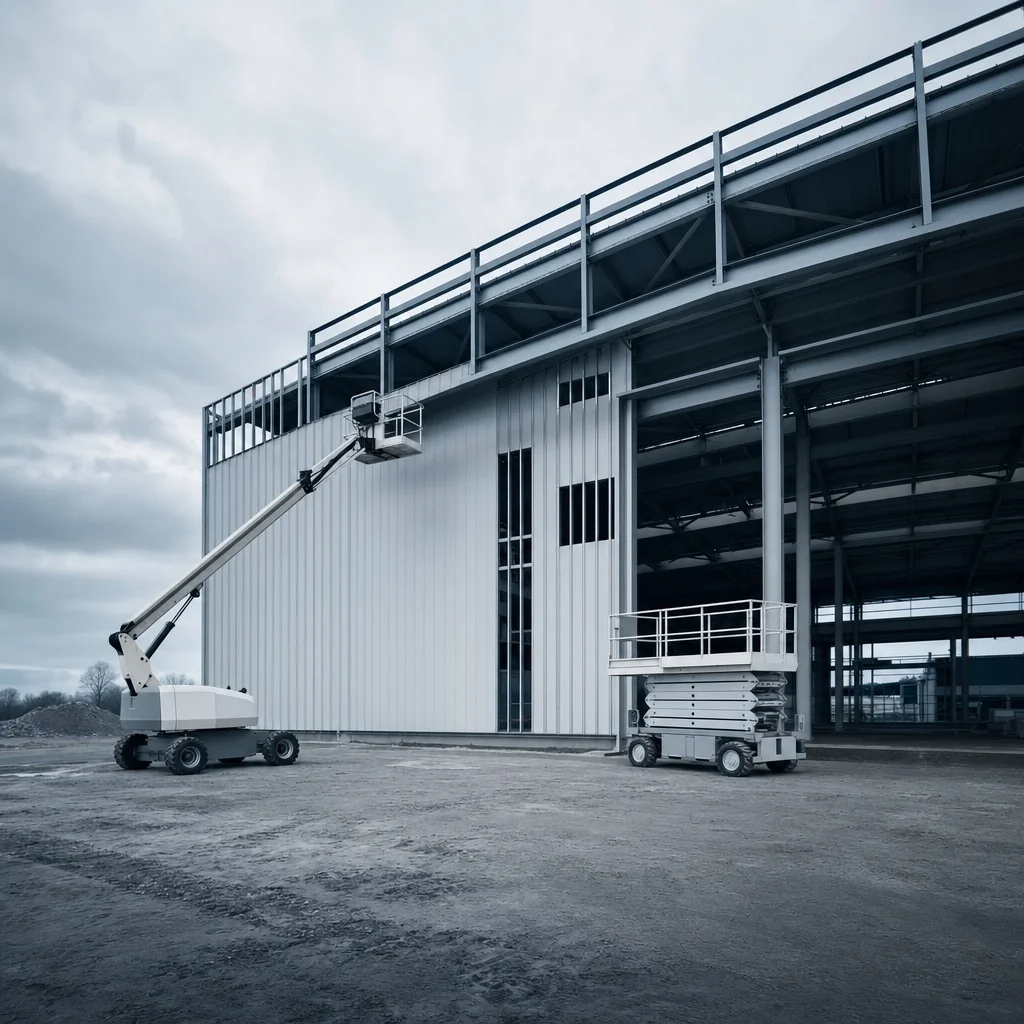
If the task sits offset from the machine or behind piping, conveyors, or aircraft structures, a boom lift may be more efficient. Compare straight and articulating options at /boom-lift-rental/ and broader choices at /aerial-lift-rental/.
Related comparisons
- Indoor slab units: /electric-scissor-lift-rental/
- Outdoor rough ground: /rough-terrain-scissor-lift-rental/
- Other elevated access: /aerial-lift-rental/ and /boom-lift-rental/
Actual site conditions, the selected unit’s instructions, and local procedures govern elevated work.