Decide by job geometry
Begin with where the platform can stand relative to the task.
- Can the machine sit below the task on a flat slab? Interior runs typically favor /electric-scissor-lift-rental/ or /vertical-mast-lift-rental/ for straight‑up work.
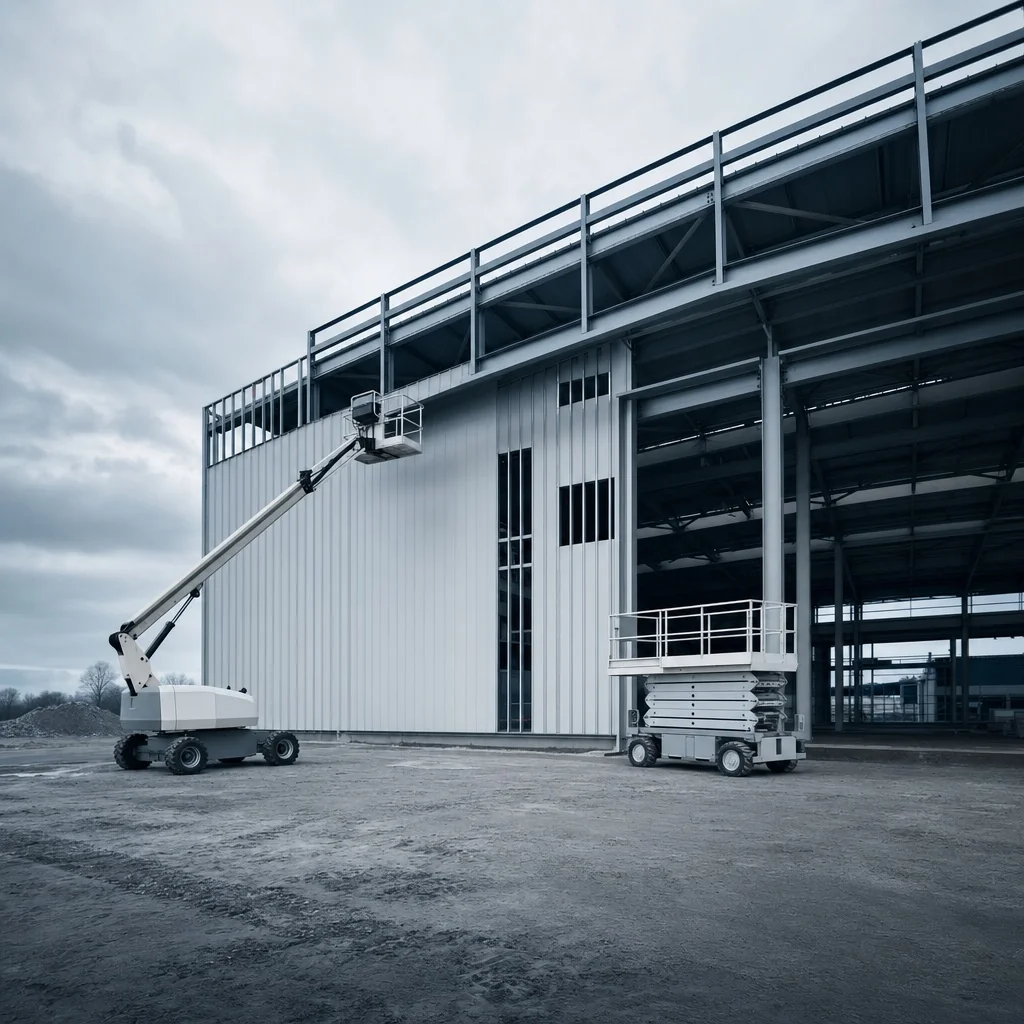
- Does the task sit offset over equipment, conduit, or mezzanines? Side reach points toward /boom-lift-rental/, with /articulating-boom-lift-rental/ for up‑and‑over in crowded bays, and /telescopic-boom-lift-rental/ for long, direct reaches.
- Mixed exterior grades or unfinished pads push scissor choices toward /rough-terrain-scissor-lift-rental/ with higher ground clearance.
Surface and approach in local conditions
San Antonio’s soils can firm up in the morning and soften after a quick cell. Limestone transitions create abrupt grade changes at site edges.
- Route width, slope breaks, and curb cuts define what can physically reach the spot.
- Finished slab in technical environments favors electric units with non‑marking tires and compact footprints.
- Exterior pads over expansive clay may require wider tires or tracked alternatives on support equipment to protect approaches.
Height, load, and task position
- Height sets the class. Interiors with lower ceiling congestion may take lighter platforms; tall bays call for higher platforms or booms.
- Platform capacity matters when moving panels, duct, or cable trays. Verify weight and footprint of materials.
- Task position—straight up, out, or up‑and‑over—selects between scissors, telescopic, or articulating booms.
Site products that support the lift plan
- Power and lighting for night or remote work: /generators-light-towers-rental/
- Secure staging near active builds: /storage-containers-rental/
- Perimeter control and pedestrian routes: /temporary-fencing-barricades-rental/
Industry patterns that influence choices
Legacy aviation facilities often provide broad slab and tall clear heights suited to larger scissors and booms. New technical campuses favor clean, flat interiors with strict aisle widths where compact electrics excel. Manufacturing lines change frequently; plan for repeat access along defined lift aisles and staging that stays clear of drainage paths.
Actual conditions, unit instructions, and site procedures govern final selection and use for elevated or exterior work.